A
The origin of Grenth?
2 pages • Page 2




That's a fairly good idea Blizzard, but it does imply that either Dhumm was really bad at chess and got beaten by a mortal, and that he has/d a very relaxed approach to mortals (see what Grenth did to those two brothers? Being a mountain can't be fun) or that Grenth was already a being with power beyond a human.
A demigod perhaps? It could be plausible that he 'ascended' from his previous position (a lesser god of chill, or something) to his current one after the challenge and defeat of Dhuum.
A demigod perhaps? It could be plausible that he 'ascended' from his previous position (a lesser god of chill, or something) to his current one after the challenge and defeat of Dhuum.
M
Quote:
|
Originally Posted by The Guild Wars Manuscripts
[...]the way to true power is by bowing down at the foot of the god of death and ice [...]
|
Quote:
|
Originally Posted by The Guild Wars Factions Manuscripts
Statues [...] depict the god with [...] the narrow, skeletal head of a beast; Canthan artists tend to add a draconic look to the skull.
|
Quote:
|
Originally Posted by The Guild Wars Manuscripts
Often, there are followers at his feet, grasping toward his open, clawed hands, clamoring for the powers[...]
|
Quote:
|
Originally Posted by Zratha Kor
The ignorant view [...] our cold god as tainted by evil. It is nothing of the sort. Grenth invites you to cast aside all the illusions of this world and judge things truly as they are.
|
Quote:
|
Originally Posted by GuildWiki
Grenth wasn't always the god of death, and it is unclear what Grenth was before he became a god.
|
Quote:
|
Originally Posted by Official Wiki
He has defeated Dhuum, the former god of death, in such an easy way that, "It was humiliating." as Dhuum had said, in the Realm of Torment.
|
Quote:
|
Originally Posted by Reaper of the Chaos Planes
Before the time of Grenth, when death was ruled by a cruel and unjust god, there stood a tower and a throne on this very plain. But Grenth rose up and destroyed the one called Dhuum and shattered down his tower[...]
|
What was he before? All this is of course speculation, but Dhuum's overthrow was supposedly related to his cruelty and injustice. This and other references suggest Grenth (aside from Death itself) is associated with power, clarity, justice and judgement, cold (although these last two may come with the death domain), vengeance and sacrifice.
Quote:
|
Originally Posted by Inscription on Statue of Grenth
And asketh she, "Where is the god to whom I may give my undying devotion? Where is the God to whom I may beg revenge against those who scorn me?"
|
Quote:
|
Originally Posted by Guild Wars Nightfall Manuscripts
Worship of Grenth requires sacrifice. [...] many of these statues have piles of bone and ivory beneath them, left as offerings by anonymous and fearful commoners. When life is difficult, zealous worshipers leave offerings of flesh and sinew[...]
|


Quote:
|
Originally Posted by Mark Nevermiss
I think Grenth was just another Kormir of sorts; he tagged behind until the poor guys had done the dirty work and then lo and behold Grenth rushes ahead and absorbs the leftover energy and takes over, becoming the new boss.
|
Quote:
|
Originally Posted by Rasaek
Dragons and bulls (which the skull looks strikingly similar to) share one thing: they are symbols of power. The skull is the symbol of death, of course; perhaps his beast-skull is meant to represent power through death, or power in death. Death is not a human or Charr domain, or even a domain of sentient creatures, such as war or magic might be considered to be, it affects all of nature.
The beast-skull might also serve as a reminder that he is not, or not as, "human" (or Charr, etc) as the other gods, perhaps a reminder of the clarity and cold rationale of the god of death, uncluttered by merely human/mortal emotions, delusions and illusions... I don't think his appearance should be interpreted literally, the skull clearly symbolizes an aspect of his nature, and the beast aspect is a reference to "power" and/or the fundamental difference between his nature and that of sentient mortals. The simplicity of this part of the statement, "rose up and destroyed," could be an implication that Grenth was already a powerful spiritual or demonic entity in the Rift. How he defeated Dhuum is not worthy of a lengthy explanation because the simplest answer is the correct one. Grenth was already a powerful entity in his own right, and being a demon or deity, it's not a complete mystery regarding how he could get to and/or defeat his adversary. The bizarre beast-skull he is portrayed with in my opinion reinforces this: he was never a mortal to begin with. What was he before? All this is of course speculation, but Dhuum's overthrow was supposedly related to his cruelty and injustice. This and other references suggest Grenth (aside from Death itself) is associated with power, clarity, justice and judgement, cold (although these last two may come with the death domain), vengeance and sacrifice. Anyway, my own opinion is that Grenth was a spirit of coldness and just vengeance... or a lesser deity of power and sacrifice... or something along those lines. |
 Maybe the other gods helped him out in some way *more then they helped us out with Abaddon, all they did was sent us in with Abaddon chained to centuries old chains.*

Quote:
|
Originally Posted by beregond
Once upon a time, Guild Wars was in development, and when coming up with names for the gods, Grenth became one, so thus the origin of Grenth.
 |
Anyway, on topic, regarding Dhuum's power being taken by Grenth; what happened to Dhuum? (And Abaddon)? They un-deified, but where did they go from there? They can't have died, because nobody really dies (they just go to the Mists, their physical body dies), so would they just become ordinary dead souls in the Realm of Torment or somewhere equally unpleasant? Perhaps Dhuum now acts as Grenth's slave? What are people's ideas on this?
The only thing is, if Dhuum surrendered his power to Grenth, why are his followers, well, his followers? He lost his position as god of death, what kind of power does he have over a horde of demons?

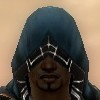
hmm, Am i right to assume that no-one has seen Grenth, meaning that all depictions of him are basically just representations. Tyria, Cantha and Elona being connected to each other, probably just share the same vision.
For all we know, on the other side of the GW world, there could be a continent that depicts Grenth as a Rabbit.
For all we know, on the other side of the GW world, there could be a continent that depicts Grenth as a Rabbit.
Quote:
|
Originally Posted by Nazar Razak
hmm, Am i right to assume that no-one has seen Grenth, meaning that all depictions of him are basically just representations. Tyria, Cantha and Elona being connected to each other, probably just share the same vision.
For all we know, on the other side of the GW world, there could be a continent that depicts Grenth as a Rabbit. |

Quote:
|
Originally Posted by Nazar Razak
hmm, Am i right to assume that no-one has seen Grenth, meaning that all depictions of him are basically just representations. Tyria, Cantha and Elona being connected to each other, probably just share the same vision.
For all we know, on the other side of the GW world, there could be a continent that depicts Grenth as a Rabbit. |
The gods did live on Tyria, in Arah, the city of the gods, wich was the capital city and epicenter of the now sunken kingdom of Orr.
And since humans lived in that city as well (at least I assume so), then it would mean that Grenth had to have been seen by mortal eyes. Thus the depictions that represent him mustnt be that far off from the truth.
But, given the nature of humans, we cant really say for sure that this is really what Grenth looks like. As for the shared vision of the 3 continents, Orr was an island nation, and to the center of Tyria/Elona; and since they were into trade, it could've spread their ''vision'' of what the gods look like.
But that could also mean that the images Canthans have of the gods as they now know them havent been there for more than 4 or 5 hundred years.
There are just so much variables and possibilities its mind-bugging.

G
[Speculation] I don't see the "gods" living on the earth, or even showing theirselves to us. Maybe they are just extremely powerful beings that had magic and strength beyond many things. They could go to and from the mists at anytime they wanted to, because of their powerful magic.
They granted magic to us as a game to see how we would evolve.
Maybe the ones we worship as gods arn't really gods, But the true gods rule the ones we see. [/speculation]
ontopic
Maybe grenth was at a haloween event and got a Cow skull as the event hat? :P
They granted magic to us as a game to see how we would evolve.
Maybe the ones we worship as gods arn't really gods, But the true gods rule the ones we see. [/speculation]
ontopic
Maybe grenth was at a haloween event and got a Cow skull as the event hat? :P
Quote:
|
Originally Posted by Fangclaw
The gods did live on Tyria, in Arah, the city of the gods, wich was the capital city and epicenter of the now sunken kingdom of Orr.
And since humans lived in that city as well (at least I assume so), then it would mean that Grenth had to have been seen by mortal eyes. Thus the depictions that represent him mustnt be that far off from the truth. But, given the nature of humans, we cant really say for sure that this is really what Grenth looks like. As for the shared vision of the 3 continents, Orr was an island nation, and to the center of Tyria/Elona; and since they were into trade, it could've spread their ''vision'' of what the gods look like. But that could also mean that the images Canthans have of the gods as they now know them havent been there for more than 4 or 5 hundred years. There are just so much variables and possibilities its mind-bugging. |
The depiction of the gods might have been lost sometime after the exodus, but no way through the Cataclysm, as Pre-Searing takes place before the Cataclysm, and there are statues of the gods in Pre-Ascalon. It is also possible for the Gods to change their forms, so what we have might not be their real depiction, going with the idea that the depiction did not change since the Exodus.